Why hire a warehouse worker for $30 per hour when a robot costs $10? JPMorgan expects booming humanoid demand.
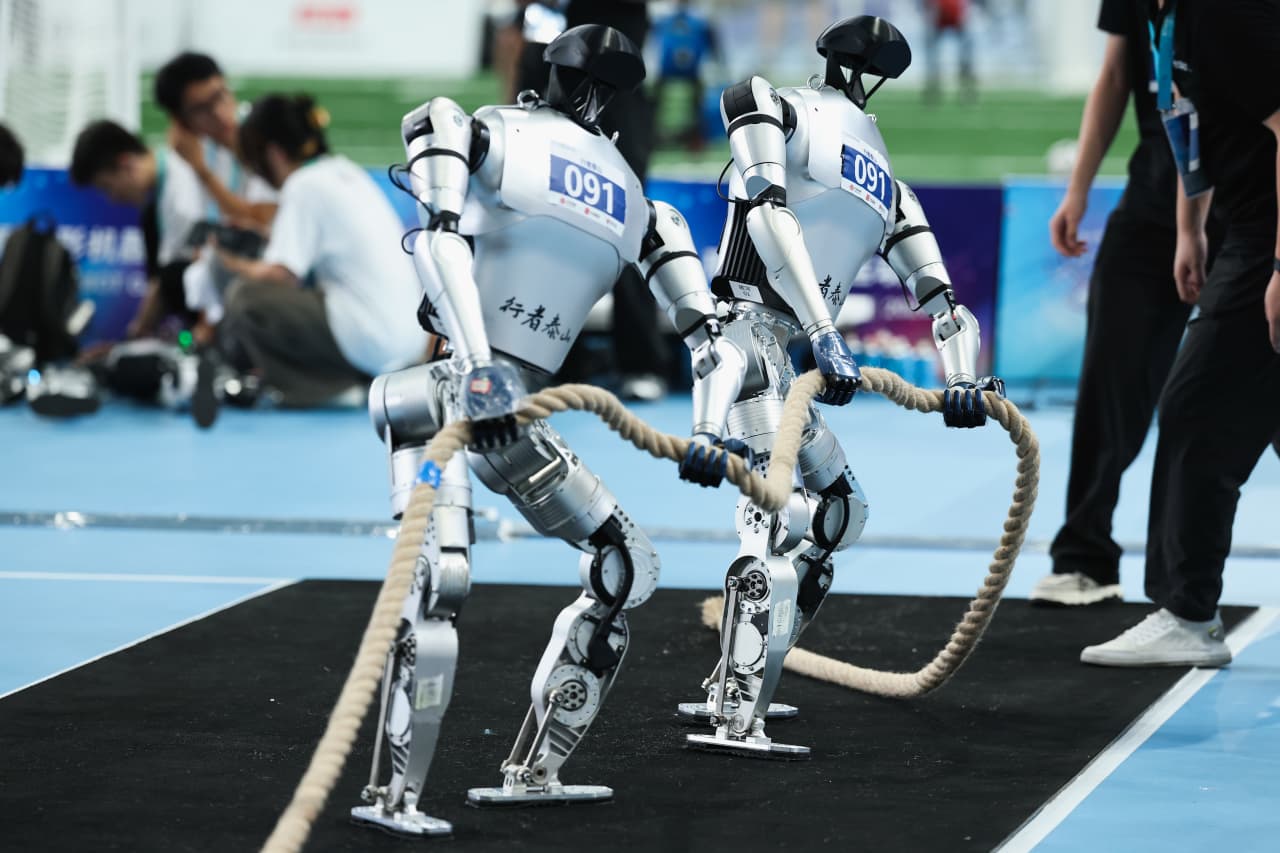
The U.S. manufacturing industry will turn to robots to fill open jobs, according to JPMorgan research.
The trend towards automation in the manufacturing industry is gaining momentum, driven in part by labor shortages and increasing wages. JPMorgan's research suggests that the demand for humanoid robots will boom as companies look to reduce labor costs and improve efficiency. With robots costing as little as $10 per hour, compared to $30 per hour for a human warehouse worker, it's no wonder that manufacturers are taking a closer look at automation.
This shift towards automation has significant implications for the labor market and the future of work. As robots take on more tasks, there may be fewer job opportunities for human workers in certain sectors. However, it's also possible that the increased productivity and efficiency brought about by automation could lead to new job opportunities in areas such as robot maintenance and programming. The manufacturing industry has long been at the forefront of automation, with many companies already investing heavily in robotics and artificial intelligence.
To watch next: how quickly can humanoid robots be scaled up to meet the demands of the manufacturing industry, and what will be the impact on the labor market? Also, what new industries might be disrupted by the increasing use of automation, and how will companies balance the need for efficiency with the need to provide jobs for human workers? As the trend towards automation continues to gain momentum, these are questions that investors, policymakers, and industry leaders will be closely watching.
Originally reported by marketwatch.com. ExpoNews adds analysis for finance & markets readers.